• Archived Posts

  • Get Involved

    Red Cross University
    Take a Social Basics class to learn how to be a digital advocate, or join our disaster digital volunteer team!


    We use TeamLab Online Office

Prepare Pawnee!

Avian Flu hits Pawnee! Well, not really, but this week’s “Parks and Rec” was a pretty good overview of what community disaster drills look like. Yes, in many community disaster drills (and in real disasters), people often do wear the funny vests with their department name on them in the “Operations Center.” Yes, in many cases people do wear placards to indicate if they’re a victim and how badly they’re affected….in some cases, I’ve even seen full on theater make-up done for more physically damaging emergencies like earthquakes. And yes, the tabletop exercises I’ve seen actually DO have binders to tell anyone participating int he drill (or the actual event) what steps need to be taken.

It’s actually a fairly complex affair when you think about it. The hundreds of hours that went into the master plan, the hours that went into each department plan, the multiple organizations involved in executing any of these plans (in case you were wondering, Red Cross usually falls under “sheltering”).

The reason communities run through these scenarios is to determine if they really have thought through every facet of a disaster response. And I’m sure communities running through these exercises don’t attempt to destroy their town to get out of the exercise faster…although what a clever way to get out of a meeting as quickly as possible!

Superbowl: Bagram Style

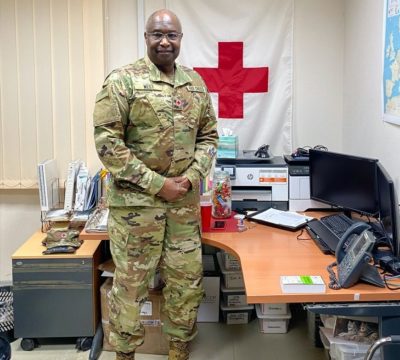
The office looking festive

The office looking festive

Everyone has their own memories of the Superbowl. Personally, the ones I remember most are my dad explaining the wardrobe malfunction to my little sisters in 2004 and living in Wisconsin when the Packers won in 2011. 2013 in Afghanistan will definitely make the list of most memorable and definitely most eventful.

With every good Superbowl there’s a party. And we found that it takes much more time and planning to set one up in Afghanistan. Our preparations started weeks prior. Brittany, who also works nights, took the lead on the project and made it a great event!

The extra TV and food

The extra TV and food

With some help from the Garrison, food was ordered from the DFAC in advanced. We collected canned and non perishable food items like chips, dip, and candy. We even had decorations courtesy of one of our volunteers who comes every Sunday to watch football in the canteen.

Our volunteers help us set up an extra TV and the decorations. The food was picked up at 2am from the DFAC and the canteen was rearranged to accomodate as many football fans as possible. It’s worth mentioning that with the time difference, the Superbowl aired at 4am in Afghanistan. Despite the early timing of the game, we knew there were plenty of people excited to watch it.

Brittany prepping snacks

Brittany prepping snacks

With all the excitement and setup going on, we were still taking turns watching the casework queue and sending out emergency messages. With a few hours to spare, everything was set up, but there was little issue. SNOW! The TV reception hadn’t been working all day.  And this wasn’t just a little snow. It was big flake, wet, heavy snow that had been coming down for over a day. Our night volunteers went as far as finding the antenna to try and clean it off, but that didn’t seem to help. The signal was down across Bagram. All we could do was sit, wait, and hope that it came back up for the game.

Volunteer and sportsfan, Erick, is ready for the game

Volunteer and sportsfan, Erick, is ready for the game

Luckily, at 330am there was some static and the picture was back! It may have been 4am , but we had a full house for kickoff and it turned out to be a great game!

The spectators just after kickoff

The spectators just after kickoff

From the Archives…

Supporting the Troops: Red Cross and the Spanish American War

February 15 marks 115 years since the USS Maine exploded in Cuba’s Havana Harbor. The explosion resulted in more than 200 deaths and served as a catalyst for the Spanish American War of 1898. It was also the first time the American Red Cross responded to a military event.

 19-N-19-9-17

Wreckage of the USS Maine, 1898, U.S. Bureau of Ships, National Archives

The U.S. government signed the 1864 Geneva Convention in 1882, providing the mandate for the Red Cross to support the military. So in 1898 the young Red Cross set out to assist the troops who went off to fight the Spanish in Cuba and the Philippines.  Clara Barton recruited nurses to serve with the troops, despite the Army surgeon general’s reluctance to allow women to care for the wounded. Barton soon overcame the obstacles.

Secretary of War R.A. Alger sent her a letter on June 6, 1898, telling her that the “tender of services of the American National Red Cross . . . for medical and hospital work as auxiliary to the hospital service of the Army of the United States, is accepted” and adding that her workers would be “subject to orders according to the rules and discipline of war, as provided by the 63 Articles of War.” By 1899, Barton had recruited some 700 nurses.

RC22328

Red Cross nurses en route to Cuba in 1898.

Barton was disheartened to see that camp conditions had not changed significantly since the Civil War, including treatment of the wounded. The soldiers wore winter weather uniforms in the tropical summer heat and countless numbers fell ill to yellow fever, typhoid fever, and dysentery. Medical officers credited the Red Cross with helping them sustain their operations under very difficult circumstances.

 4403

Clara Barton (seated at center in dark clothes) waits with her entourage for U.S. Navy permission to sail the State of Texas to blockaded Cuba, where war raged. The ship departed on June 10, 1898.

One hundred and fifteen years later, the American Red Cross has continued the proud tradition of providing service to the U.S. military and their families at home and abroad.

Betcha Never Thought About Preparing for Meteors

someecards.com - Let's be emergency buddies in case more astronomical phenomena come flying at us.

Today’s news about a meteor falling in Russia, injuring hundreds of people, might be the most bizarre headline to wake up to this morning. The video below seems like something right out of an action movie- one of those end-of-the-world deals.

I’m not the paranoid type, but I do believe a whole bunch in being prepared and staying calm during emergencies. If anything, I’m glad that this strange event has given me a chance to do a little research and think through what I’d do! Here are my top three tips:

  1. Move away from those windows! It’s been reported that many of the injuries being reported were the result of windows shattering and shards cutting people nearby. This was a result of the sonic boom caused by the meteor moving into the atmosphere faster than the speed of sound (wow).
  2. Have basic first aid tips readily available. I would definitely make use of the First Aid app on my phone, which makes it possible for me to load up instructions on treating any cuts or broken bones.
  3. Move to the bottom floor of a building. Just as you should move to the bottom floor to lessen the chances of getting in the way of a tree falling on your house during a severe storm, you should also try to get out of the way of any falling debris from the meteor. I would also try to cover my head to avoid head injury. Maybe I’ll get a Space Helmet to stay on theme.

Anyway, given that another encounter with space is happening this afternoon, here’s to being prepared! Happy asteroid watching!

The View from Gallery 3, Row B, Seat 1

SOTU ticket

Although you likely didn’t see me, I had the honor of attending the State of the Union speech on Tuesday night as one of several guests invited by House Speaker John Boehner.  It was exciting to be there and to have the opportunity to witness this piece of history unfold before my eyes.

After attending the Speaker’s reception and meeting his guests, like Ted Kremer, former batboy for the Cincinnati Reds, two adorable fourth graders from a local school in Washington, and a Cardinal from the Archdiocese of Washington, I was ushered into Gallery 3 and took my seat in Row B, Seat 1.  It was a packed house, and every seat in the Gallery was taken; some people were actually assigned to sit in the aisle on the cement steps.

When you’re looking at the president on television, Gallery B is above the main floor where the members of Congress sit and directly across from the First Lady’s box.  While it may not look it, the Gallery is far from the main floor—my guess is about three stories.

I sat in the same section with the wives of the Joint Chiefs of Staff.  Sylvia Panetta, wife of Secretary of Defense Leon Panetta, shared with me that she was a nurse and volunteered with the Red Cross when she was younger.  She thanked me for all that we do, and I thanked her right back for her and her husband’s service.  Since my own husband and dad served in the military and my stepson is in the Air Force, I felt extraordinarily proud to sit with these women whose lives have been defined by sacrifice and service to our country.

I admit, I was overcome by the pomp and circumstance of it all.  As you know, all three branches of government were represented, reminding me of our system of checks and balances. The Supreme Court justices parading in with their robes.  Members of the House and Senate from different parties sitting together.  And the president, entering and being bombarded with handshakes, smiles, and thunderous applause.

In the crowd, I picked out dozens of senators and members of Congress who participated in our Holiday Mail for Heroes campaign, and I saw several cabinet members who work closely with us on disaster response operations and blood collection.  In my own box, I saw fellow New Yorker Tony Bennett.

There were several times I found myself tearing up at the wonderful display of freedom playing out before me.  Some members of Congress resoundingly applauded the president’s every word, while others crossed their arms and frowned.  At times there were heartfelt signs of bipartisan support.  While we all complain about the gridlock in Washington, at least we have the freedom to disagree.  Not everyone around the world has these freedoms, and I feel very thankful to be a citizen in a country that does.

It was a once-in-a-lifetime evening.  I was honored to sit in Gallery 3, Row B, Seat 1, representing Red Crossers everywhere, having a bird’s eye view of the State of the Union.

Show the Love: Donate Blood

images-1I’m not a big fan of Valentine’s Day, at least in the tradition sense. With the holiday comes a tremendous amount of pressure to speak the most romantic phrase that’s every been spoken or make the most romantic gesture that’s ever been made, and more often than not – at least in my experience – expectations get out of hand and the day ends up a disappointment. Additionally, Valentine’s Day has recently become a “crafting” holiday (thanks a lot, Pinterest), and I always feel like I’ve let someone – my kids, their friends, the crafting world – down if I don’t create elaborate, homemade Valentine’s Day cards for my kids to distribute in their classrooms.

I celebrate Valentine’s Day with my children, not because I love it, but because they love it. We make Valentine’s Day cards for friends, we bake a heart-shaped dessert to enjoy after dinner, and I give the kids a small Valentine’s Day gift that they receive at the end of a treasure hunt. I try my best to keep the day very simple and it usually ends up being fun.

I don’t really celebrate Valentine’s Day with my husband because neither of us is interested in adding any additional stress to our lives. We don’t buy each other extravagant gifts, go out to dinner, or spend a weekend away; usually we enjoy a piece or two of my heart-shaped dessert, tag along with the kids on their treasure hunt, and give each other a Valentine’s Day card (which he purchased on the way home from work an hour earlier).

It’s not that I don’t think Valentine’s Day is worth recognizing or that I don’t love my husband enough to celebrate our love on February 14th. It’s just that I don’t really like the way our society celebrates Valentine’s Day: the pressure, the expectations, the money.

donate_blood_rotator_0I’d been looking for new ways to celebrate Valentine’s Day when it suddenly came to me…what better way to show my love – for my community and those who call it home, including my family and friends – than to donate blood at an American Red Cross blood drive?

Donating blood adds very little stress to my life: all I need to do is schedule my appointment and show up. Donating blood takes very little time out of my day: between the amount of time I spend in the car and the hour or so I spend at the drive, I’m committed for less than two hours. Donating blood costs me nothing, AND I get a cookie out of the deal (which I can enjoy, guilt-free, because it’s Valentine’s Day and we’re all allowed an extra treat or two on holidays).

Donating blood is the perfect Valentine’s Day gift.

So as Valentine’s Day approaches, I invite you to consider celebrating a little differently this year. Click here to find a Valentine’s Day blood drive in your area and to make an appointment to donate. (And don’t worry if there isn’t a blood drive ON Valentine’s Day in your area – you can always draw the holiday out a little longer and donate during the week before or after.)

Show the love: donate blood!

Sharing the Love, Blood Donor Style

We <3 our blood donors!

Nelson Mandela, on the Red Cross

On this date in 1990, Nelson Mandela was released from prison after 27 years in captivity. He was regularly visited by the ICRC during his long years of detention.
In 2003, a week before his 85th birthday, Mr. Mandela spoke about the work of the ICRC and the Red Cross/Red Crescent Movement in London, saying that the Red Cross was a “beacon of humanity” for political prisoners.

Twenty-three years after his release from prison, here is the full text of Madiba’s wonderful British Red Cross Humanity Lecture of July 10, 2003.

“It is a great honour to be have been invited to deliver this Red Cross Humanity Lecture.

Not only does the Red Cross hold a special place in our collective sense of ourselves as a globally caring community; to me personally, and those who shared the experience of being political prisoners, the Red Cross was a beacon of humanity within the dark inhumane world of political imprisonment.

The improvements in the conditions of our imprisonment at Robben Island were to a large measure due to the pressure that the mere presence of the Red Cross brought to bear on our jailer-regime. It says much for the moral weight of the Red Cross that even the apartheid regime, which was in so many other respects indifferent to world opinion, found itself cowed and pressurised by this organisation.

It teaches a lesson that those who conduct themselves with morality, integrity and consistency need not fear the forces of inhumanity and cruelty; evil ultimately lives in fear of and under threat from the uncompromising commitment to justice, fairness and humane compassion.

The history of the world, also in the last two centuries, had unfortunately been a story of too many wars with all the attendant cruelty of humankind against humankind. The twenty-first century, which so many hoped would at last be the century of the triumph of world peace and global caring, has not started too promisingly. Conflicts still plague many areas on the globe, and we have seen the emergence of unilateral superpower military interventions.

In the midst of bloodshed and war, of animosity and pain, hatred and conflict, the Red Cross has carried the flag of the belief in our common humanity; and lived out that belief in action in conditions and circumstances where the opposite sentiment dominated.

The Geneva Conventions and its successor conventions, grown out of the International Red Cross, continue to remind us most forcefully of our common obligation to care for each other even, and particularly, in conditions that foster behaviour to the contrary. These conventions are a call to caring multilateralism. They tell us, more powerfully than all the political treaties, of the strength of multilateralism and international consensus.

We have found ourselves compelled to speak out strongly in recent months against the rise of unilateralism in world affairs. We publicly and in private expresse d our sharp differences on this matter with Prime Minister Blair and President Bush, both young leaders whom we otherwise hold in high regard.

The differences we have on this matter, particularly as manifested in the war against Iraq, are not simply issues of political difference. I am a retired old man, without any office or political influence or any desire to such office or influence. I have lived through almost the entire twentieth century, in a country and continent where we had to devote almost all of that life to struggling against a social and political legacy left by events of the nineteenth century. To see young political leaders of the developed world in the twenty-first century act in ways that undermine some of the noblest attempts of humanity to deal with those historical legacies, pains me greatly and makes me worry immensely about our future.

That is the nature of my difference with them and my criticism against them. In a world still so grossly unequal, both in material terms and in terms of power and influence, our hope for orderly co-existence lies in global co-operation and an uncompromising multilateral approach to dealing with our problems, conflicts, differences and challenges.

For almost one and a half centuries the International Red Cross had stood as such an organ of international and multilateral co-operation. To be here with you is a proud affirmation of the values of global co-operation and respect for the basic human rights of all, irrespective of all social or national differences. We salute you and join with you in this quest for human solidarity and caring.

When one speaks of the great role the International Red Cross has played one tends to think particularly of its noble part during times of war.

There is a new war of global dimensions underway that we cannot neglect mentioning in this context. We are referring to the war against HIV/AIDS.

AIDS represents a tragedy of unprecedented proportions unfolding particularly in Africa, but with incidence and effect across the globe. AIDS today in Africa is claiming more lives than the sumtotal of all wars, famines and floods, and the ravages of such deadly diseases as malaria. It is devastating families and communities; overwhelming and depleting health care services; and robbing schools of both students and teachers.

Business has suffered losses of personnel, productivity and profits; economic growth is being undermined and scarce development resources have to be diverted to deal with the consequences of the pandemic.

HIV/AIDS is having a devastating impact on families, communities, societies and economies. Decades have been chopped from life expectancy and young child mortality is expected to more than double in the most severely affected countries of Africa. AIDS is clearly a disaster, effectively wiping out the development gains of the past decades and sabotaging the future.

It is no less than a war, a world war that affects all of us ultimately. The developing world is, as in so many other cases , suffering the worst while having the least resources to deal with the threat. Once more, an organisation like the International Red Cross and its national chapters can play a huge role in mobilising world opinion and resources to help combat this terrible and threatening scourge.

We are in this modern globalised world each the keeper of our brother and sister. We have too often failed that moral calling. The International Red Cross had been both our conscience and the source of redeeming us in this regard.

I thank you for that in my personal capacity and from my personal experience together with my fellow political prisoners. I am certain that a world wishing for the better of our human nature to triumph and prevail, thanks you as much.

May you see this third century in which you operate, truly becoming the one in which all human beings across the globe will at last enjoy a better life.

I thank you.”

How Your World Can Change in a Moment’s Notice

This week, my work came full circle when I personally felt the incredible reach of the American Red Cross firsthand.

Blizzard: Cape Cod

For the past 10 years I have worked for Blood Services as a communicator and volunteered to deploy during disaster relief efforts. I have deployed 14 times during which I have responded to tornadoes, hurricanes and other tragedies on a moment’s notice. Most recently I was in New York City in the aftermath of Superstorm Sandy and I spent a week in Newtown Connecticut assisting in the community after the unimaginable school shooting at Sandy Hook Elementary School.

Earlier this week, I was at work at the Red Cross in Dedham when I received news no one wants to hear.  My condominium complex was engulfed in flames.  Four units were a total loss. Luckily my condo which was 100 feet away was intact other than a little smoke damage.  A young mother fled the building with an infant in her arms.  Another resident ran into the bitter cold in his bare feet.  The Red Cross responded and we were grateful for their support.

Two days later the February Blizzard was a looming threat in the Northeast.  I decided to ride it out on the Cape where I have a home with my German Shepard Sebastian.  One of my fellow Red Cross colleagues Jecoliah came to my condo as well.  The Cape was expected to experience less of an impact than Greater Boston but we thought we could pre-position in case we needed to help after the storm made landfall.

My condo rattled and rolled with the high winds.  We lost electricity and faced bitter cold conditions.  It was 45 degrees inside and we bundled up until it was safe to get on the road.  We could see our breath in the air and all we could do was hunker down and wait.  When it was safe to do so we went to a shelter to get warm and have a bite to eat.  While we were there we were able to work with the media to show the good work of the Red Cross, emergency management and partner agencies.

So here is an open message to all Red Cross workers who are unwavering in their dedication from a grateful recipient of your services.  Your work matters and from the bottom of my heart thank you for all that you do.  You respond in a moment’s notice and put everything aside to answer the call for help.  This week, my neighbors and I received Red Cross support in our hour of need in both communities in which I reside.  God bless you for making a difference in the lives of others. And this Red Crosser is proud to stand beside you with arms wide open!


How to Survive Cabin Fever

Written by Jecoliah Ellis

It may be storming outside, but it smells amazing inside Donna’s condo on Cape Cod.

j and bassShe is serving up steak tips and spinach soufflé. One positive to being snowed in is you have extra time to make a delicious meal, maybe even dessert if your loved ones are lucky. If you are planning to be a master chef it’s important to cook while you have electricity because as is the case in New England thousands of our neighbors are without power.

If you’re not a whiz in the kitchen there are a few other things you can do to keep yourself from going stir crazy.

1) Massachusetts Governor Deval Patrick has banned residents from driving so we can’t hop in the car and explore the scenes. Local and national news outlets are broadcasting around the clock bringing viewers all the incredible photos. Don’t put yourself in harm’s way – instead sit back and let the remote do the work. I’d be remiss not thanking members of the media who are out there braving the conditions along with first responders, OEM and Red Cross volunteers.

Also if you’re a social media junkie like us follow weather organizations like NOAA and The Weather Channel for the very latest.

j and seabassAs I listen to the wet snow pound on the sky line and watch the lights constantly flicker I know we may lose power soon. But we need to be connected so we have our phones and iPads charging now and have multiple ports in the car in case we need a charge in the middle of the blizzard. Just make sure you crack the windows if you’re sitting in your car getting some more juice. (Thanks for the tip Renita!). Oh and not to worry if the electricity goes out and it gets start we have a 125 pound bundle of love German Shepard to keep me warm.

2.) Music makes the world go round so put on some jams and have a dance party. You’ll burn some calories from your five star meal and you’ll find your smiling a minute later. Trust me I do it all the time.

3.) Donna’s condo is impeccable, but if you’re more of the disorganized type like me you may want to take this time to tidy up your house and get around to some of the projects on the “to do” list.

If all else fails you can make a snowman ( if it’s safe to do so) or catch up on some sleep. Whatever you chose to do with your free time be safe and enjoy this rare opportunity to enjoy a break from our fast paced often hectic lives.